From the preface
These notes grew out of graduate lectures organized around the idea that fusion, space physics, astrophysics, and liquid-metal MHD are not separate intellectual worlds. The same equations reappear in all of them; what changes is the dominant balance, the closure, and the physical intuition needed to use them well.
The current manuscript also has an unusual provenance. It began this semester as an experiment in whether handwritten lecture notes from about fifteen years ago could be recovered through OCR and turned into a serious LaTeX draft with ChatGPT. That first transcription was unexpectedly successful, and the present edition was then expanded, corrected, and reorganized through a continuing human-AI collaboration.
I have also come to believe that a subject becomes memorable when it is organized around problems rather than around formalism alone. That is why these notes are built around flux freezing and its failure, equilibrium and force balance, waves, stability, dynamos, self-organization, reconnection, shocks, and the geometric and topological constraints that make magnetized fluids both elegant and dangerous.
Books, notes, and people I learned from
These lectures lean heavily on the classical literature and on a long line of excellent books and notes, especially Cowling, Chandrasekhar, Roberts, Hide, Moffatt, Kulsrud, Miyamoto, Freidberg, Schnack, Bellan, Wesson, Krall and Trivelpiece, and Zohm.
Russell Kulsrud deserves a special note here. I first learned MHD in my first year at Princeton, in the spring of 1987 at the Graduate Program in Plasma Physics, from Russell himself. His kinetic-MHD notes were very much on his mind at the time, and they helped shape the way I first encountered the subject. Later I learned a great deal more from him as I moved into experimental dynamo work, and then again from his textbook, which remains one of the clearest guides to how plasma physics, kinetic thinking, and MHD fit together.
These notes also reflect material learned from conversations, classes, blackboards, and draft notes, including ideas and derivations I learned from Dalton Schnack, Steve Cowley, Alex Schekochihin, Dmitri Ryutov, and many others.
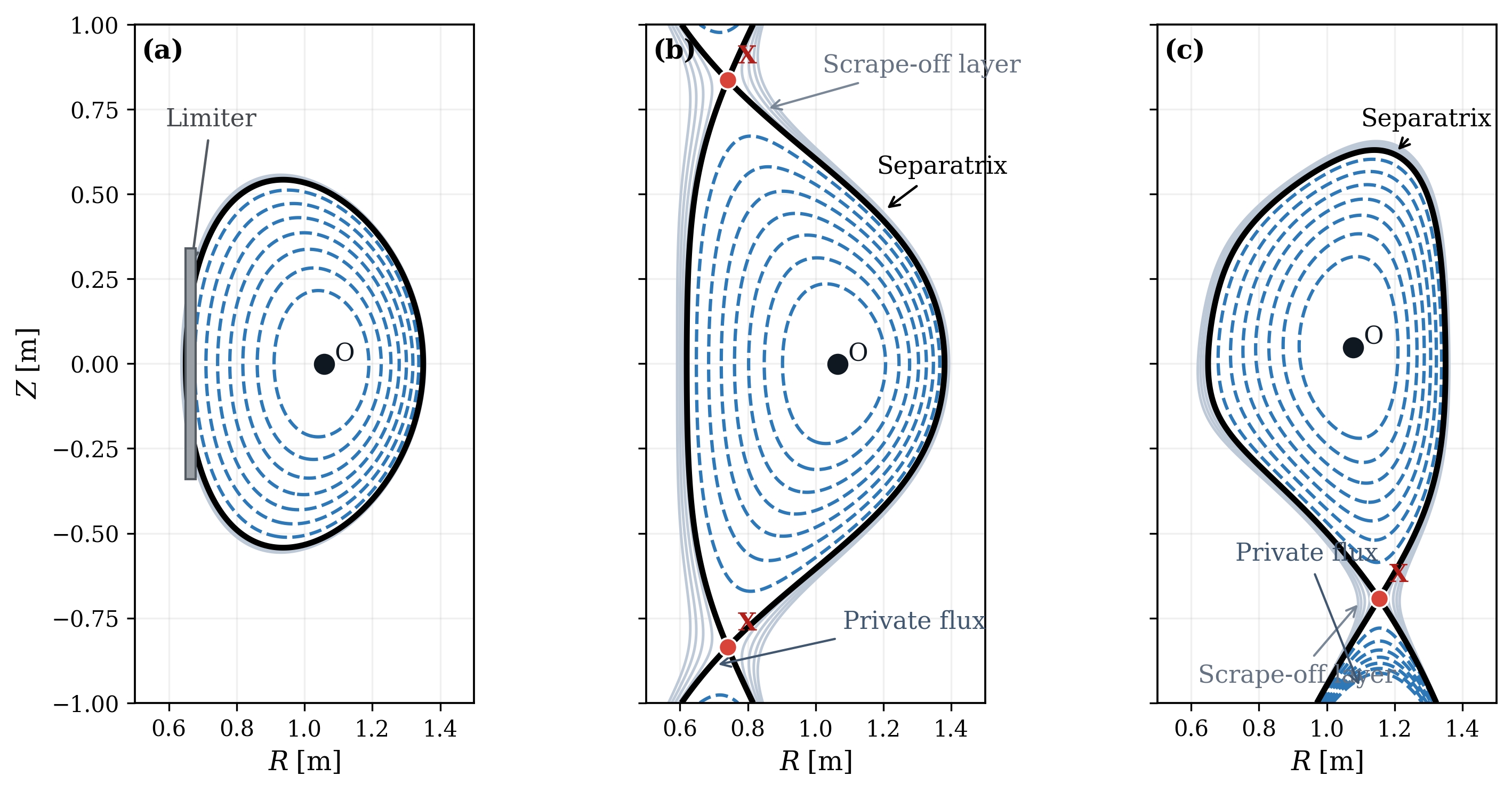 Equilibrium and shapingAnalytic Grad-Shafranov structure, shaping, reconstruction, and the geometry of confined plasmas.
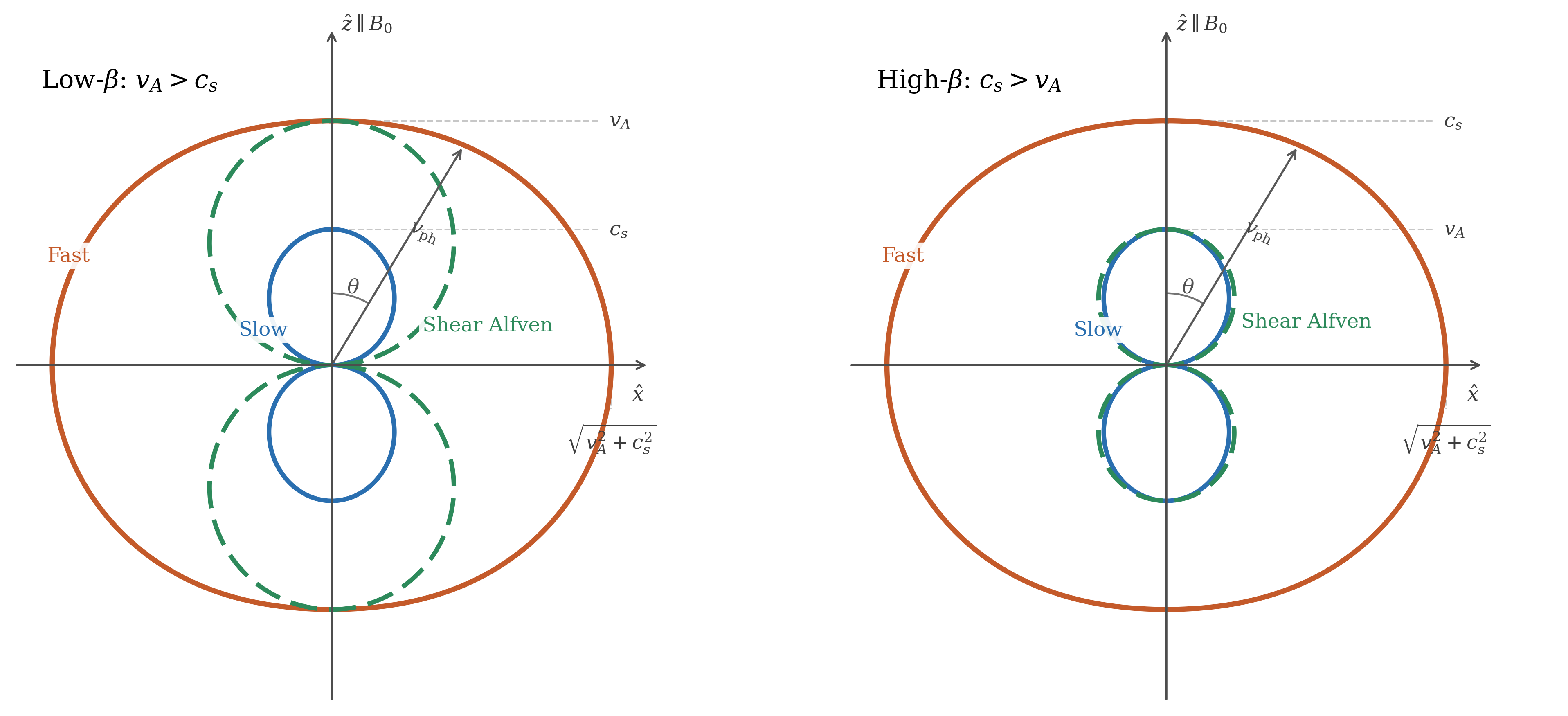 Waves and continuaFrom basic Alfvén-wave geometry to toroidal continua, gaps, and energetic-particle-driven mode structure.
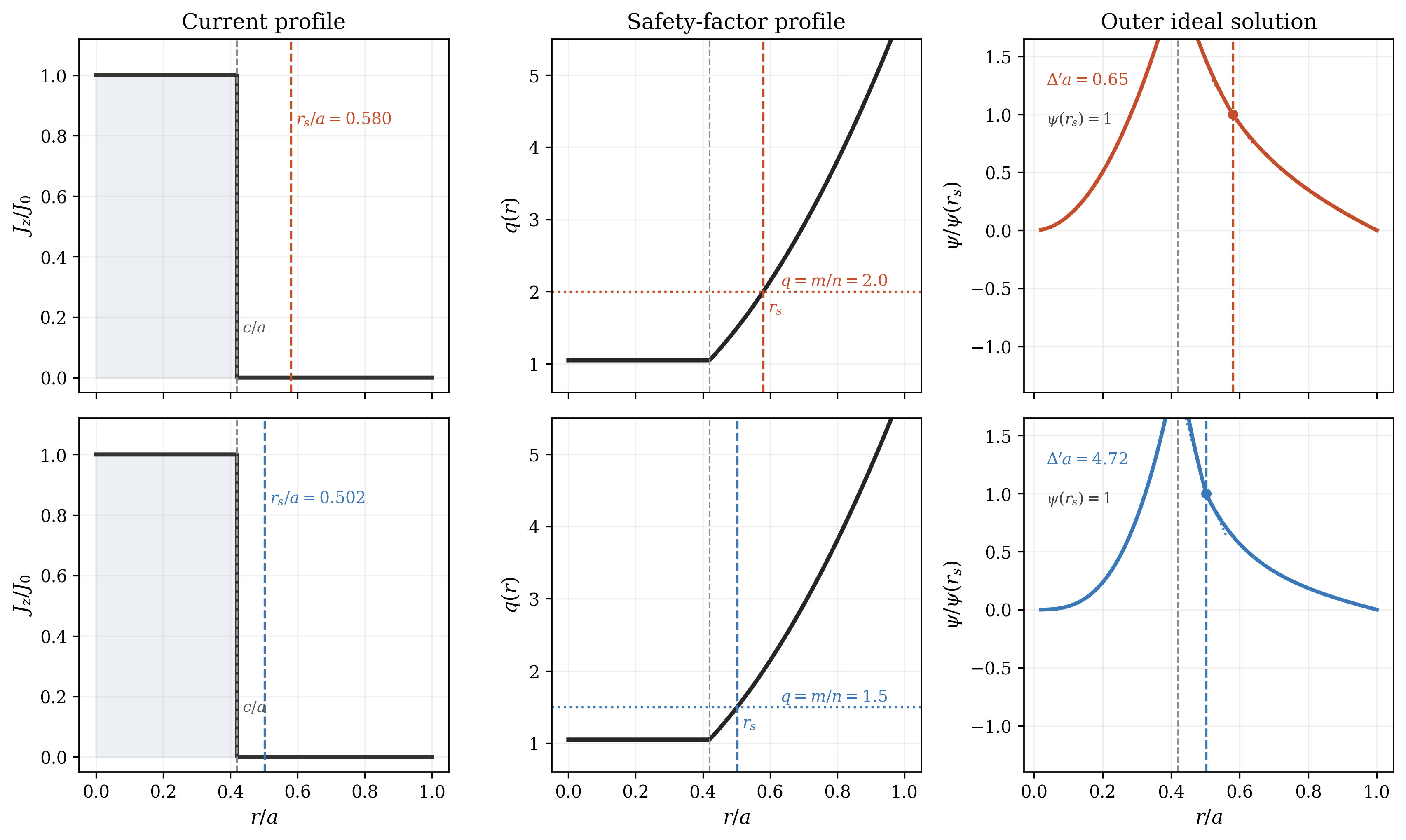 Relaxation and reconnectionTearing, helicity, self-organization, and the ways magnetic topology changes when ideal constraints fail.